




news
Environment
Results 21 - 26 of 26.
Earth Sciences - Environment - 21.03.2025
Core samples from Greenland's seabed provide first historical overview of plastic pollution
Plastic Pollution By coring the seabed at 850 m water depth in Disko Bay off Greenland's west coast, researchers from the University of Copenhagen have obtained the first historical record of plastic pollution in Greenland. The new data suggest a link to local socio-economic development and represent a step towards developing a common method for analyzing and mapping global microplastic pollution.
Environment - Agronomy & Food Science - 14.03.2025
What Denmark can learn from Malawi: Trees can benefit health, local economies and climate
Trees Denmark's Green Tripartite Agreement aims to plant trees in an effort to restore nature and reduce agricultural land. However, a new study from Malawi shows that trees can do more than just capture CO2 - they can also contribute to healthier diets, enhance food security, add vibrancy to local economies and protect against climate change.
Environment - Earth Sciences - 04.03.2025
Resilient algae may speed up Greenland ice melt
New research reveals that ice algae can store nutrients which may enable them to colonize more of the ice sheet, darkening and melting it. It's May. The sun is up and the heat from that distant star can finally be felt as a warm tingling sensation on the skin. The snow starts to melt. Flowers and plants break through the ice gasping for light.
Environment - Agronomy & Food Science - 11.02.2025
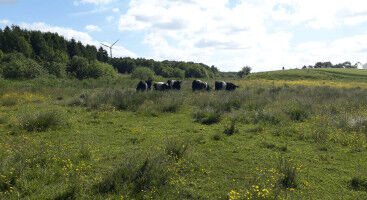
Wetlands While the restoration of natural areas is high on political agendas, a comprehensive new study from the University of Copenhagen shows that - after more than two decades - biodiversity growth has stalled in restored Danish wetlands. The results also suggest that time alone will not heal things because the areas are too small and dry, and nitrogen inputs from agriculture continue.
Life Sciences - Environment - 10.02.2025
Why Women Live Longer Than Men - and Why They Will Continue to Do So
Researchers have studied the lifespans of 1,176 animal species. Among mammals, females usually live the longest - including humans - and scientists believe this pattern will continue. Women live longer than men. This can be observed all'over the world, and it has been true throughout history. But why is that, especially now that living conditions have improved in many places and access to medical care is widely available?
Life Sciences - Environment - 05.02.2025

Antibiotic resistance Researchers from the University of Copenhagen have learned that antibiotic resistant DNA can survive on the surface of minerals such as sand or clay, and this may increase the spread of antibiotic resistance from animals to humans. Imagine one of Denmark's many picturesque beaches, the waves lapping against the shore, the golden sand and the smooth pebbles.


