


wire - news in brief
Life Sciences
Results 1 - 25 of 25.
Environment - Life Sciences - 18.03.2026 - Today
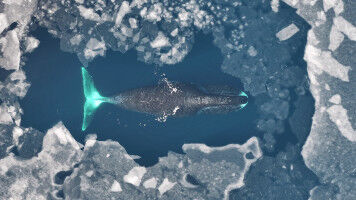
DNA Commercial whaling has left the bowhead whale vulnerable for many generations to come. A unique collection of prehistoric bowhead whale bones, dating back 11,000 years, reveals a previously untold story of the relative impacts of humans on nature. The time series of ancient fossils show that commercial hunting of bowhead whales, which spanned 400 years and ceased less than a century ago in 1931, has left irreversible destructive traces in the species' genetics.
Life Sciences - Psychology - 29.01.2026

DECISIONS New research from the University of Copenhagen, INSERM and Friedrich Miescher Institute for Biomedical Research shows that the brain in mice works in separate channels at the same time, when they respond to emotionally significant stimuli. The research helps us better understand how the brain can quickly react to what is important.
Earth Sciences - Life Sciences - 16.12.2025
Identical micro-animals live in two isolated deep-sea environments. How is that possible?
It sounds almost impossible. And yet, the same nematodes live in two extremely isolated deep-sea trenches located 17,000 km apart.
Health - Life Sciences - 12.12.2025
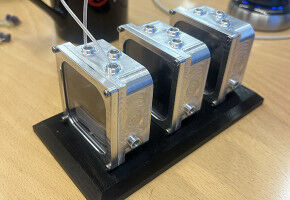
How do you study gut bacteria when they keep dying every time you try? You build a model that makes it possible.
Health - Life Sciences - 05.12.2025
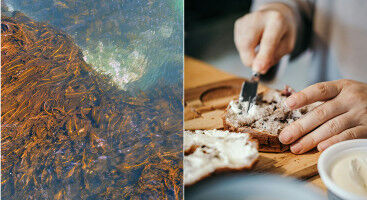
Food Seaweed has long been praised as a sustainable superfood, but its characteristic 'fishy' flavor has been a barrier for many Western consumers. Now, a new study from the University of Copenhagen shows that fermentation with lactic acid bacteria may be the key to making seaweed more palatable. Eating seaweed can be extremely healthy, we often hear.
Environment - Life Sciences - 24.11.2025
Humpback Whales Are Making a Comeback - Here’s One Reason Why
Humpback whales are less picky eaters than other baleen whales. If cod runs out in an area, they may switch to krill.
Environment - Life Sciences - 19.11.2025
Life Sciences - Environment - 06.11.2025
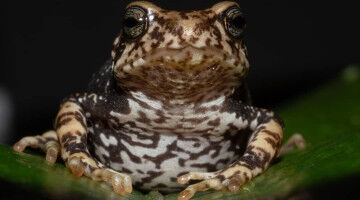
Animals An international team of researchers have identified three new species of enchanting, pustular, tree-dwelling toads from Africa.
Health - Life Sciences - 24.10.2025
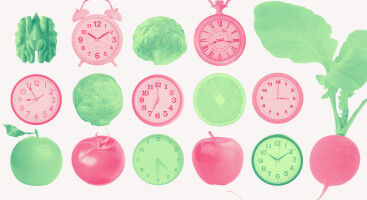
CIRCADIAN RHYTHM Food - in addition to sunlight - regulates our internal biological clock and its ability to adapt to the seasons, according to new research in mice. According to researchers, it could have health benefits to eat more seasonal and locally produced food. Our blood pressure rises in the morning, our brain releases sleep hormones before bedtime, and our body temperature drops during sleep.
Life Sciences - Health - 12.09.2025
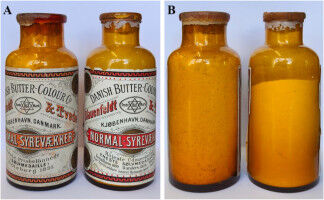
Bacteria Two forgotten bottles in a basement in Frederiksberg containing bacterial cultures from the 1890s have provided researchers at the University of Copenhagen with unique insight into Denmark's butter production history.
Health - Life Sciences - 04.09.2025
30,000 students map the health of Danish soil
How healthy is our soil, really? That is the question 30,000 school students from all'over Denmark are eagerly digging into when they, in weeks 36-39, carry out this year's Masseeksperiment. Armed with registration booklets, spades, the VESS index, earthworm keys and sample tubes, the students head out to playgrounds, football fields or local nature areas to investigate soil health at depths of 10 cm and 40 cm.
Life Sciences - History & Archeology - 21.08.2025
How Archaeologists Used Science to Determine the Sex of Medieval Children
Between the years 1150 and 1450, more than 100 children were buried in a churchyard near Silkeborg. Just a tiny fragment of their tooth enamel is enough to reveal their sex-and that's exactly what researchers at SDU have now done.
Environment - Life Sciences - 14.08.2025
Kunstigt-edderkoppespind-kan-afloese-elastan
Researchers at SDU will soon print a small piece of high-tech, plastic-free future. They are aiming to replace elastane with artificial spider silk.
Earth Sciences - Life Sciences - 09.07.2025

Mysterious animals The Greenland shark - the world's longest-living vertebrate - is most often associated with cold Arctic waters. However, a new international study led by researchers from the Greenland Institute of Natural Resources and the University of Copenhagen shows that Skagerrak probably serves as a nursery area for young Greenland sharks.
Life Sciences - 27.06.2025

Insects Botanists from the University of Copenhagen and the UK set out to find the best flower combinations for bees and hoverflies.
Life Sciences - Chemistry - 25.06.2025
New Danish research centre to make designed proteins with vast potential
Protein research Designed proteins are anticipated to have groundbreaking impact on a range of issues from treating disease to tackling environmental problems.
Health - Life Sciences - 28.05.2025

Health - Life Sciences - 09.05.2025
Researchers map 7,000-year-old genetic mutation that protects against HIV
GENETICS Modern HIV medicine is based on a common genetic mutation. Now, researchers have traced where and when the mutation arose - and how it protected our ancestors from ancient diseases. What do a millennia-old human from the Black Sea region and modern HIV medicine have in common? Quite a lot, it turns out, according to new research from the University of Copenhagen.
Life Sciences - 08.05.2025
Unraveling RNA sorting: New research to decode cellular decision-making
Cells in our body produce vast amounts of RNA - but only a fraction is actually useful. How do cells know which RNA molecules to keep and which to discard?
Health - Life Sciences - 04.03.2025
Denmark opens new centre for research in Parkinson’s disease
The Lundbeck Foundation grants DKK 313 million for a new centre for Parkinson's research in Aarhus. The goal is for the centre to test new treatments for the disease within the next 10 years.
Health - Life Sciences - 05.02.2025
New blood test to detect hidden liver disease
Life Sciences - Environment - 23.01.2025
Environment - Life Sciences - 02.06.2024
Collaboration on Odense Fjord and Funen to inspire other EU countries
Agronomy & Food Science - Life Sciences - 22.11.2022
Less mold, more food
Foods like fruit, vegetables and dairy products often get attacked by mold or fungus and therefore must be discarded.
Life Sciences - Environment - 21.03.2022
Finally, the eelgrass is coming back
Scientists' effort to bring the eelgrass back to Danish waters has proven very successful: After 2 years, there are now 70 times more eelgrass shoots in Horsens Fjord in Denmark.


