


news 2025
Categories
Results 41 - 60 of 102.
Life Sciences - Earth Sciences - 21.08.2025

Greenland The Inuit arrived in Greenland several hundred years earlier than previously believed. This is revealed by a genetic mapping of sled dogs, conducted by researchers from institutions including the University of Copenhagen. For many of us, dogs are our best friends, but in Greenland, sled dogs have for centuries been more than just loyal companions: they are an indispensable workforce, contributing to hunting and pulling sleds across the country's icy terrain.
Life Sciences - Chemistry - 20.08.2025
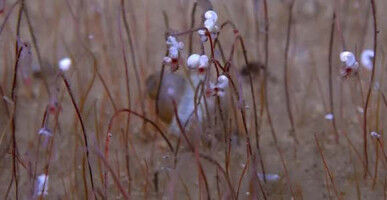
When a research team reached the bottom of a deep-sea trench, they suddenly found themselves surrounded by thousands of unusual animals thriving in the cold, dark deep. "This shows how much more can be discovered when diving with a submersible and directly observing the seabed, rather than only bringing up samples 'blindly'," says deep-sea researcher Ronnie N. Glud, co-author of a new article published in Nature ( find it here ) .
Health - Innovation - 18.08.2025
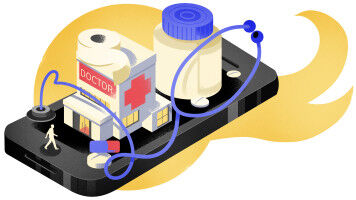
Health technology Engineers are working with doctors to develop wearable digital health technologies that can prevent and treat diseases at home, helping healthcare services reduce outpatient visits and readmissions. We live longer. At the same time, the number of elderly people with a wide combination of chronic diseases is increasing, and recruiting nurses and doctors is becoming more difficult.
Politics - 14.08.2025

Politics With a few adjustments, the quality of online political debates can be significantly improved, according to new research. However, a better tone of debate does not necessarily change people's attitudes, the researchers behind the study point out. Online political debates are often characterised by sharp divisions, personal attacks and a low level of information.
Health - Pharmacology - 13.08.2025

Innovation Researchers have developed a new light technology that appears to improve cognitive function in Alzheimer's patients in clinical trials. The hope is that the idea can be developed into ordinary lamps that people can install to prevent the disease. Researchers at DTU and UC Berkeley, together with spin-out company OptoCeutics, have invented a non-medical form of therapy that can improve brain activity: light-based deep brain stimulation that induces a specific type of brain wave that Alzheimer's patients benefit from.
Politics - 12.08.2025

Innovation - Life Sciences - 12.08.2025
Jellyfish can be used to make mayonnaise and butter
Researchers at the University of Southern Denmark (SDU) have discovered that jellyfish can be used as a food stabiliser. In the future, the slimy creatures may become an important ingredient in a more sustainable food production system. Food stabiliser. The word might not sound particularly appetising, but without food stabilisers, much of the food we eat would be impossible to make.
Environment - Earth Sciences - 10.08.2025
Heatwaves at Sea May Force the Ocean to Release More CO2
We already know that marine heatwaves can harm the ocean's animals and reefs. Now, a new study reveals that marine heatwaves may also weaken the oceans' ability to store carbon Heatwaves not only occur on land - they also occur in the oceans, causing ocean temperatures to stay warmer than normal for longer periods.
Chemistry - Pharmacology - 07.08.2025

ISOTOPES Medicines have a unique chemical fingerprint, according to a new study from the University of Copenhagen. Researchers say this knowledge can be used to trace counterfeit or stolen medicine. That's how many packages of illegal medicines EU agencies confiscated during an eight-month operation in 2024.
Health - Life Sciences - 01.08.2025
Microbiome breakthrough: Gut bacterium may hold key to future treatments for widespread chronic diseases
Microbiome An international research team led by scientists from the University of Copenhagen has discovered a common gut bacterium that lowers body weight and blood sugar while increasing bone density. The finding could pave the way for a new approach to preventing and treating cardiovascular disease, obesity, diabetes, and osteoporosis.
Psychology - Campus - 23.07.2025

A new study challenges the notion that Americans fear ethnic and religious replacement. On the contrary, the majority want a more diverse United States. At a time marked by debate about identity, migration and national cohesion, a new study brings a surprising message: Most Americans want a more ethnically and religiously diverse society than the one they live in today.
Health - Life Sciences - 17.07.2025

Staphylococcus Goats, horses and cows carry a bacterium that could become an effective weapon against increased antibiotic resistance in society. New research from the University of Copenhagen shows that signaling molecules from this bacterium can treat infections caused by multi-resistant Staphylococcus bacteria in an animal model as effectively as antibiotics.
Health - Life Sciences - 09.07.2025

ANCIENT DNA A new study maps infectious diseases across millennia and offers new insight into how human-animal interactions permanently transformed our health landscape. A research team led by Eske Willerslev, professor at the University of Copenhagen and the University of Cambridge, has recovered ancient DNA from 214 known human pathogens in prehistoric humans from Eurasia.
Environment - Earth Sciences - 03.07.2025

Sea Levels Researchers from the University of Copenhagen have gained unique insight into the mechanisms behind the collapse of Antarctic ice shelves, which are crucial for sea level rise in the Northern Hemisphere. The discovery of old aerial photos has provided an unparalleled dataset that can improve predictions of sea level rise and how we should prioritise coastal protection and other forms of climate adaptation.
Pharmacology - Health - 30.06.2025

ADHD Millions of adults around the world are diagnosed with ADHD every year, and there is a great need for research in the field. However, much clinical research on adult ADHD suffers from serious methodological shortcomings that make it difficult to use the results in practice, researchers from the University of Copenhagen and the University of Sao Paulo show in a new study.
Politics - 27.06.2025

Politics New research shows that politicians speak less intelligibly when in government - losing voters can be the consequence. It's well known that governing parties often lose voters over time - the so-called cost of governing. But a new study from Frederik Hjorth, Associate Professor of Political Science at the University of Copenhagen, documents a lesser-known but potentially crucial side effect of being in government: politicians begin to speak less simply and understandably.
Health - Psychology - 25.06.2025

Mental health In mother groups, mental health challenges can spread among new parents. New research from the University of Copenhagen and VIVE shows that the risk of experiencing postnatal reactions, such as depression, increases if you interact with other parents who are affected. In Denmark, new parents are typically placed in a parent group with 5-7 other families.
Pedagogy - 25.06.2025

Parenthood Most first-time parents in Denmark feel competent and experience low levels of parental stress during their child's first year of life. However, new research shows that some groups find it significantly more difficult - and that parents' support needs changes over time. A new study from the University of Copenhagen provides a nuanced picture of how first-time parents in experience the first year with their child.
Agronomy & Food Science - Economics - 24.06.2025

Groceries A new study reveals an unfortunate effect of supermarkets' popular "2 for 1" offers: Not only do they make us buy more, these offers also lead to food waste at home. Food waste is a huge global problem - both economically and climatically. The UN estimates that one third of all food goes to waste.
Health - Innovation - 20.06.2025
Vaccine disguised as a virus tricks the body into stronger immunity
Vaccine: A more effective vaccine technology may be on the horizon. In a new study in mice, researchers from the University of Copenhagen demonstrate that a simple addition to mRNA vaccines can significantly enhance their effectiveness. The innovation could become a powerful tool in the next pandemic.


