


news
Innovation
Results 1 - 9 of 9.
Computer Science - Innovation - 17.02.2026
Researchers’ algorithm could become an important step towards privacy in the age of AI
If you, as a user, want to protect your privacy, it is not enough to ask tech companies to delete your data. What the companies' AI models have learned from that data must also be unlearned. Researchers from SDU Applied AI and Data Science have now found a way to do this without weakening model performance.
Life Sciences - Innovation - 15.12.2025
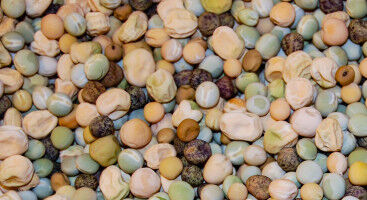
AI and plants Using a new AI method, researchers from the University of Copenhagen have rediscovered 51 old pea varieties that are no longer used in agriculture but may prove promising for the production of plant-based foods. The method is a shortcut to finding new resources in the green treasure troves that gene banks' enormous seed collections represent.
Pedagogy - Innovation - 08.09.2025

Artificial intelligence does not necessarily help students learn more if it is only used to provide answers. However, research from the University of Copenhagen shows how aligning GenAI with learning theories and a human-centered perspective improves its educational impact. Artificial intelligence is here to stay.
Health - Innovation - 18.08.2025

Health technology Engineers are working with doctors to develop wearable digital health technologies that can prevent and treat diseases at home, helping healthcare services reduce outpatient visits and readmissions. We live longer. At the same time, the number of elderly people with a wide combination of chronic diseases is increasing, and recruiting nurses and doctors is becoming more difficult.
Innovation - Life Sciences - 12.08.2025
Jellyfish can be used to make mayonnaise and butter
Researchers at the University of Southern Denmark (SDU) have discovered that jellyfish can be used as a food stabiliser. In the future, the slimy creatures may become an important ingredient in a more sustainable food production system. Food stabiliser. The word might not sound particularly appetising, but without food stabilisers, much of the food we eat would be impossible to make.
Health - Innovation - 20.06.2025
Vaccine disguised as a virus tricks the body into stronger immunity
Vaccine: A more effective vaccine technology may be on the horizon. In a new study in mice, researchers from the University of Copenhagen demonstrate that a simple addition to mRNA vaccines can significantly enhance their effectiveness. The innovation could become a powerful tool in the next pandemic.
Innovation - Agronomy & Food Science - 21.05.2025
Machines that can tell seeds apart
The future of farming isn't just about giant tractors and airborne drones. Even the humble seed analysis is now stepping into the digital age. A new study from Aarhus University and the Tystofte Foundation shows how artificial intelligence and image recognition could revolutionise one of agriculture's most manual tasks.
Innovation - 13.05.2025
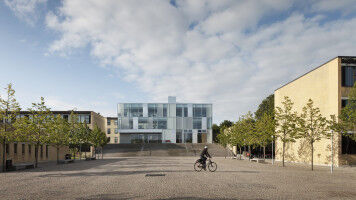
DTU's technologies and innovations must benefit people, society and the planet. The research and solutions must be responsible, and work in society in a way that benefits as many people as possible. DTU wants to create technology for people. Therefore, considerations about how a new technology can affect people - the social impact - must be included in DTU's research designs right from the idea phase.
Environment - Innovation - 24.03.2025
Danish researchers: Four out of five new constructions must be stopped
A new study by researchers at DTU, SDU, and AAU shows that bio-based building materials alone are not enough to make the construction industry sustainable. We need to build much less. If the Danish construction industry replaces mineral wool, concrete, and steel with wood, hemp, and straw, one might think that the green transition of construction could be ticked off.


