




news
Life Sciences
Results 1 - 20 of 44.
Veterinary - Life Sciences - 23.02.2026

Animals A horse's whinny is an unusually distinctive mix of sounds including both high and low frequencies. Researchers from Department of Biology demonstrate how horses produce high-frequency sounds that defy their large size while simultaneously producing lower tones: they whistle through their larynx while vibrating their vocal folds as a human does while singing.
Health - Life Sciences - 19.02.2026
Newly discovered virus linked to colorectal cancer
Researchers from the University of Southern Denmark have identified a new virus in a common gut bacterium. The virus is found significantly more often in patients with colorectal cancer. Colorectal cancer is one of the most common types of cancer in the Western world and a leading cause of cancer-related deaths.
Life Sciences - Health - 04.02.2026
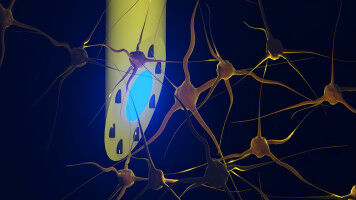
Health A new type of brain implant may have implications for both brain research and future treatments of neurological diseases such as epilepsy.
Life Sciences - Health - 28.01.2026
Cells Have a Built-in Capacity Limit for Copying DNA, and it Could Impact Cancer Treatment
A research team has identified a new mechanism that controls DNA's ability to replicate - and thereby a cell's ability to divide. Since cancer cells are characterized by aggressive division, this discovery is significant for cancer research. For almost 60 years, scientists have tried to understand why DNA doesn't replicate wildly and uncontrollably every time a cell divides - which they need to do constantly.
Life Sciences - Health - 22.01.2026

Neural tissue normally dies quickly without oxygen. Yet bird retinas - among the most energy-demanding tissues in the animal kingdom - function permanently without it. This allowed birds their razor sharp vision and ability to migrate at high altitudes. Most animals need a constant supply of oxygen to their neural tissue - but not birds.
Health - Life Sciences - 12.01.2026

Health Researchers from DTU have patented an invention that uses naturally produced substances from gut bacteria of the bifidobacteria type to reduce the risk of allergies and asthma. Allergies and asthma affect an increasing number of children worldwide, but now an international research group led by DTU has identified a previously unknown mechanism that can reduce the risk of allergies and asthma later in life.
Life Sciences - Environment - 16.12.2025

Biodiversity Researchers at the University of Copenhagen have discovered that moss acts as a natural trap for environmental DNA. This discovery opens the door to using moss as a simple, gentle and inexpensive method of monitoring biodiversity - from birds and mammals to fungi, insects and microbes. Right now, many of us have a bit of moss sitting in our Christmas decorations at home.
Life Sciences - Innovation - 15.12.2025
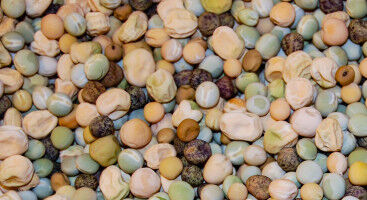
AI and plants Using a new AI method, researchers from the University of Copenhagen have rediscovered 51 old pea varieties that are no longer used in agriculture but may prove promising for the production of plant-based foods. The method is a shortcut to finding new resources in the green treasure troves that gene banks' enormous seed collections represent.
Life Sciences - Agronomy & Food Science - 26.11.2025

Agriculture An international research team led by the University of Copenhagen, Shanghai Jiao Tong University and the University of Nottingham has discovered how plant roots penetrate compacted soil by deploying a well-known engineering principle. The finding could have major implications for future crop development at a time when pressure on agricultural land is increasing.
Life Sciences - Paleontology - 17.11.2025
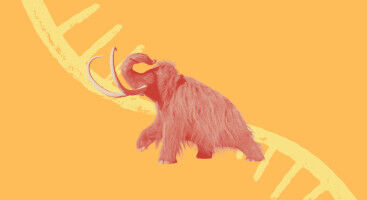
New research offers a unique insight into the lives of mammoths during the last Ice Age. Scientists have taken an important step closer to understanding the mythical mammoths that roamed the Earth thousands of years ago. For the first time ever, a research team has succeeded in isolating and sequencing RNA molecules from woolly mammoths dating back to the Ice Age.
Environment - Life Sciences - 12.11.2025

Rewilding A new nationwide survey from the University of Copenhagen shows that most Danes would like to see more large animals in the forests. Danes prefer forests with wild animals such as red deer and bison to traditional nature conservation with cattle and sheep. However, a significant minority are far from enthusiastic about nature with fences and large animals.
Life Sciences - Pharmacology - 30.10.2025
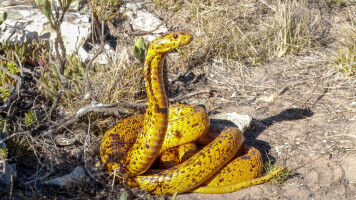
Biotechnology DTU researchers are behind a potentially groundbreaking antivenom that could revolutionize the treatment of venomous snakebites in Africa. Snakebite envenoming is among the world's deadliest yet most overlooked tropical disease. The WHO has classified snakebite envenoming as one of 21 neglected tropical diseases, resulting in between 100,000 and 150,000 deaths worldwide each year.
Life Sciences - Health - 27.10.2025

Schizophrenia A specific type of brain cell is abnormally active in mice exhibiting behavior reminiscent of schizophrenia, according to a new study from the University of Copenhagen. By dampening the activity of these cells, researchers were able to restore the animals' behavior-an insight that may pave the way for a new preventive treatment.
Life Sciences - Health - 11.10.2025
Scientists Removed Amino Acids From the Diet of Lab Mice - and They Lost Weight
Experiments on mice have compared two ways to make the body burn energy without moving. One well-known method is to expose the body to cold. The other is to remove two specific amino acids from the diet. It's not pleasant to shiver from the cold, but for some, it has the appeal of making the body burn more energy as heat than when staying in a warmer environment.
Life Sciences - Health - 07.10.2025
Hidden mechanism in cells may shape the medicine of the future
Researchers from the Department of Molecular Biology and Genetics, Aarhus University, have uncovered a previously unknown function of the enzyme OGA, a key player in cellular regulation. The discovery may pave the way for new approaches to treating diseases such as Alzheimer's. October 2025 by Helene Eriksen How does a cell keep track of its many signals? One answer lies in tiny sugar tags that are constantly added to and removed from proteins.
Health - Life Sciences - 02.10.2025
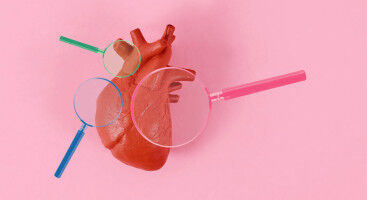
PROTEOMICS Researchers from the University of Copenhagen have developed a groundbreaking method that allows for the analysis of thousands of proteins in heart tissue. This provides entirely new insights into the characteristics of heart diseases and could pave the way for more targeted treatments. Each year, cardiovascular diseases affect more than 65,000 Danes - conditions that claim the lives of one in five Danes.
Life Sciences - Environment - 16.09.2025

A new study reveals that methane can form in the upper layers of sandy seabeds - something that has taken scientists by surprise. Special microorganisms are at work, and the phenomenon may be happening along coastlines all'over the world. Methane is a powerful greenhouse gas, produced in many natural environments by microorganisms.
Life Sciences - Campus - 11.09.2025
Erreur DeepL: {"message":"Value for ’source_lang’ not supported."}
Health - Life Sciences - 04.09.2025
The ’stomach’s brain’ is more in sync with the mind during mental distress
Researchers from Aarhus University have discovered a connection between the stomach's rhythm and psychological well-being that could change the way we diagnose and treat mental disorders. Perhaps your stomach can tell if you're heading toward stress. by Jakob Binderup Christensen Stronger coordination between the brain and the stomach's natural rhythm is linked to higher levels of anxiety, depression, and stress, according to the largest study of its kind from Aarhus University.
Health - Life Sciences - 04.09.2025
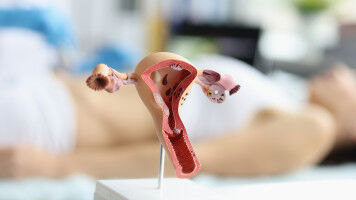
Health Technology Researchers from DTU and Amager and Hvidovre Hospital will have access to the Gefion supercomputer in a series of projects on women's diseases in a new collaboration with the Danish Centre for AI Innovation, DCAI. The healthcare system lacks knowledge about women's diseases and how to treat them.


