


news 2025
« BACK
 Your Christmas decorations may be hiding a tiny bit of badger and toad
 The Paradox of Climate Protest
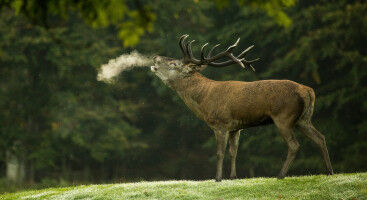 Wild animals divide Danes - but most say ’yes’ to red deer and fences
 Danmark and the Nordics have the largest stock of plastic per capita in the world
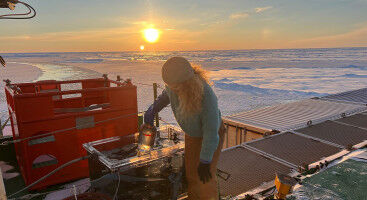 Important phenomenon discovered in the Arctic - could boost marine life
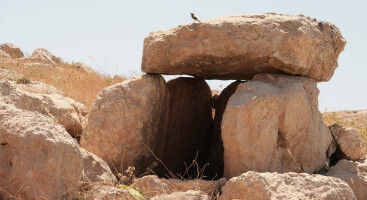 Archaeologists excavate 5,500-year-old ritual landscape in Jordan
 Sandy Seafloors: An Overlooked Source of Greenhouse Gas
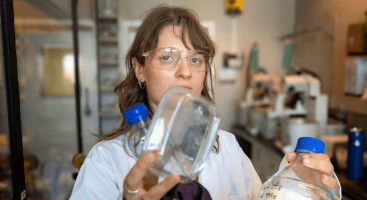 Scientists transform plastic waste into efficient CO2 capture materials
 Old aerial photos give scientists a new tool to predict sea level rise
 The recipe for algae-free solar energy
 Saving the Asian Unicorn - If It Still Exists
Environment
Results 1 - 20 of 23.
Life Sciences - Environment - 16.12.2025
Biodiversity Researchers at the University of Copenhagen have discovered that moss acts as a natural trap for environmental DNA. This discovery opens the door to using moss as a simple, gentle and inexpensive method of monitoring biodiversity - from birds and mammals to fungi, insects and microbes. Right now, many of us have a bit of moss sitting in our Christmas decorations at home.
Environment - 21.11.2025
Activism Disruptive protest actions are among the tools often used by climate activists. New research from the University of Copenhagen shows that these types of actions have the intended effect: they raise public awareness of climate change. However, they also carry the risk of backlash. Climate activism takes many forms, but one of the most visible is so-called disruptive protests.
Environment - Life Sciences - 12.11.2025
Rewilding A new nationwide survey from the University of Copenhagen shows that most Danes would like to see more large animals in the forests. Danes prefer forests with wild animals such as red deer and bison to traditional nature conservation with cattle and sheep. However, a significant minority are far from enthusiastic about nature with fences and large animals.
Environment - 11.11.2025
Researchers from the University of Southern Denmark (SDU) and the University of Cambridge have, for the first time, mapped the total flow of plastic in the Nordic countries. The study shows that the Nordic region holds the world's largest stock of accumulated plastic per capita and that only around 5% is recycled domestically.
Environment - 11.11.2025
Denmark and the Nordics have the largest stock of plastic per capita in the world
Researchers from the University of Southern Denmark (SDU) and the University of Cambridge have, for the first time, mapped the total flow of plastic in the Nordic countries. The study shows that the Nordic region holds the world's largest stock of accumulated plastic per capita and that only around 5% is recycled domestically.
Environment - Earth Sciences - 20.10.2025
Researchers from the University of Copenhagen have discovered an important phenomenon beneath the Arctic sea ice that was previously thought impossible. This phenomenon could have implications for the food chain and the carbon budget in the cold north. The shrinking sea ice in the Arctic Ocean is, overall, a disaster.
History & Archeology - Environment - 16.10.2025
Archaeology A research team led by the University of Copenhagen has uncovered a remarkable Early Bronze Age ceremonial gathering place at Murayghat in Jordan. The discovery may shed new light on how ancient societies responded to social and environmental upheaval. How did ancient cultures react to severe crises and the breakdown of the established social order? The 5,500-year-old bronze age site of Murayghat in Jordan, excavated by archaeologists from the University of Copenhagen, may hold an answer.
Life Sciences - Environment - 16.09.2025
A new study reveals that methane can form in the upper layers of sandy seabeds - something that has taken scientists by surprise. Special microorganisms are at work, and the phenomenon may be happening along coastlines all'over the world. Methane is a powerful greenhouse gas, produced in many natural environments by microorganisms.
Environment - Materials Science - 05.09.2025
Carbon Capture From waste to valuable resource: Chemists at the University of Copenhagen have developed a method to convert plastic waste into a climate solution for efficient and sustainable CO2 capture. This is killing two birds with one stone as they address two of the world's biggest challenges: plastic pollution and the climate crisis.
Environment - Earth Sciences - 10.08.2025
Heatwaves at Sea May Force the Ocean to Release More CO2
We already know that marine heatwaves can harm the ocean's animals and reefs. Now, a new study reveals that marine heatwaves may also weaken the oceans' ability to store carbon Heatwaves not only occur on land - they also occur in the oceans, causing ocean temperatures to stay warmer than normal for longer periods.
Environment - Earth Sciences - 03.07.2025
Sea Levels Researchers from the University of Copenhagen have gained unique insight into the mechanisms behind the collapse of Antarctic ice shelves, which are crucial for sea level rise in the Northern Hemisphere. The discovery of old aerial photos has provided an unparalleled dataset that can improve predictions of sea level rise and how we should prioritise coastal protection and other forms of climate adaptation.
Materials Science - Environment - 02.06.2025
A transparent coating that prevents growth of algae on underwater solar cells has been developed for the U.S. Navy. DTU researchers have developed an important coating for underwater drones and solar cell platforms. The coating will not adorn the drones in different colours, but rather act as a self-polishing coating that keeps algae and other biofouling away from the drones' built-in solar cells when they are on mission below sea level.
Life Sciences - Environment - 05.05.2025
Endangered species The saola, an antelope-like bovine, is one of the world's rarest and most endangered mammals. In fact, it hasn't been observed in over 10 years. Researchers from the University of Copenhagen, in collaboration with Vietnamese scientists and an international team of researchers, have for the first time mapped the saola's complete genome, and they have used that knowledge to estimate the chances of saving it - if it still exists.
Environment - Life Sciences - 09.04.2025
Ancient grain has huge climate potential and could play a key role in Europe’s future
Crop farming Sorghum is one of the world's oldest grains and possesses many traits that can benefit food security, climate resilience, and biodiversity. However, the mechanisms behind these traits have long remained a mystery to researchers, which has hindered efficient cultivation. Now, a new technique and a biobank - developed in collaboration with the University of Copenhagen - have made research and breeding possible at an unprecedented pace, paving the way to an effective crop in both the Global North and South.
Life Sciences - Environment - 27.03.2025
Major bird study could help us fight the next pandemic
Evolution New study uncovers the intricate factors that drive the evolution of genomes. Utilizing data from the world's largest bird genome database, it could have implications such as understanding how diseases adapt to human demographics or climate conditions Evolution. Nature's engine, driving and shaping genetic change and the diversity around us.
Environment - Innovation - 24.03.2025
Danish researchers: Four out of five new constructions must be stopped
A new study by researchers at DTU, SDU, and AAU shows that bio-based building materials alone are not enough to make the construction industry sustainable. We need to build much less. If the Danish construction industry replaces mineral wool, concrete, and steel with wood, hemp, and straw, one might think that the green transition of construction could be ticked off.
Environment - Life Sciences - 24.03.2025
Hidden Process Behind Nitrous Oxide Formation
A newly discovered chemical reaction sheds light on an unexpected source of nitrous oxide, a potent greenhouse gas, in both marine and freshwater environments. Nitrous oxide (N2O) is a greenhouse gas about 300 times more powerful than carbon dioxide (CO2), and its atmospheric concentration continues to rise.
Earth Sciences - Environment - 21.03.2025
Core samples from Greenland's seabed provide first historical overview of plastic pollution
Plastic Pollution By coring the seabed at 850 m water depth in Disko Bay off Greenland's west coast, researchers from the University of Copenhagen have obtained the first historical record of plastic pollution in Greenland. The new data suggest a link to local socio-economic development and represent a step towards developing a common method for analyzing and mapping global microplastic pollution.
Environment - Agronomy & Food Science - 14.03.2025
What Denmark can learn from Malawi: Trees can benefit health, local economies and climate
Trees Denmark's Green Tripartite Agreement aims to plant trees in an effort to restore nature and reduce agricultural land. However, a new study from Malawi shows that trees can do more than just capture CO2 - they can also contribute to healthier diets, enhance food security, add vibrancy to local economies and protect against climate change.
Environment - Earth Sciences - 04.03.2025
Resilient algae may speed up Greenland ice melt
New research reveals that ice algae can store nutrients which may enable them to colonize more of the ice sheet, darkening and melting it. It's May. The sun is up and the heat from that distant star can finally be felt as a warm tingling sensation on the skin. The snow starts to melt. Flowers and plants break through the ice gasping for light.


